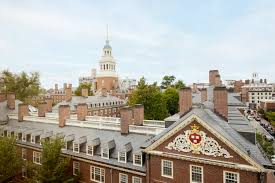
My younger brother Dave having died unexpectedly on September 30 of this year, I found myself in New England in early October for his funeral and the family gathering near his home in New Hampshire. My middle son, Abe, had picked me up at Boston’s Logan Airport for the drive up north, and on our return, I had asked if we might stop off in Cambridge for a quick visit to my alma mater. Like so many alumni of beloved colleges, an occasional hour or so on its grounds has always brought me the deep satisfaction of being home again.
As we walked around Harvard Yard and then down to the Kennedy School where I had spent a semester as an Institute of Politics fellow in 1998, Abe and I exchanged reflections on what we had each taken into later life from our undergraduate experiences. I won’t attempt to summarize Abe’s characterization of his Vassar education in those terms, but I found that my efforts to capture for him what features of my Harvard experience had accompanied me through life proved to be both challenging and meaningful for me.
The exercise was given greater salience by the fact that I had, earlier that morning, read a statement that Harvard president Claudine Gay had made the day before about the university’s response to campus demonstrations in the wake of the Hamas attack of the previous week. I remember telling Abe that I had been favorably impressed by her words, including these:
Our University rejects terrorism – that includes the barbaric atrocities perpetrated by Hamas.
Our University rejects hate—hate of Jews, hate of Muslims, hate of any group of people based on their faith, their national origin, or any aspect of their identity.
Our University rejects the harassment or intimidation of individuals based on their beliefs.
And our University embraces a commitment to free expression.
President Gay had gone on to say that “It’s in the exercise of our freedom to speak that we reveal our characters. And we reveal the character of our institution. We can issue public pronouncements declaring the rightness of our own points of view and vilify those who disagree. Or we can choose to talk and to listen with care and humility, to seek deeper understanding, and to meet one another with compassion.” With these words she had caught the essence of what I was attempting to describe for Abe as the lifelong impact of the education I had received on the campus we were then walking.
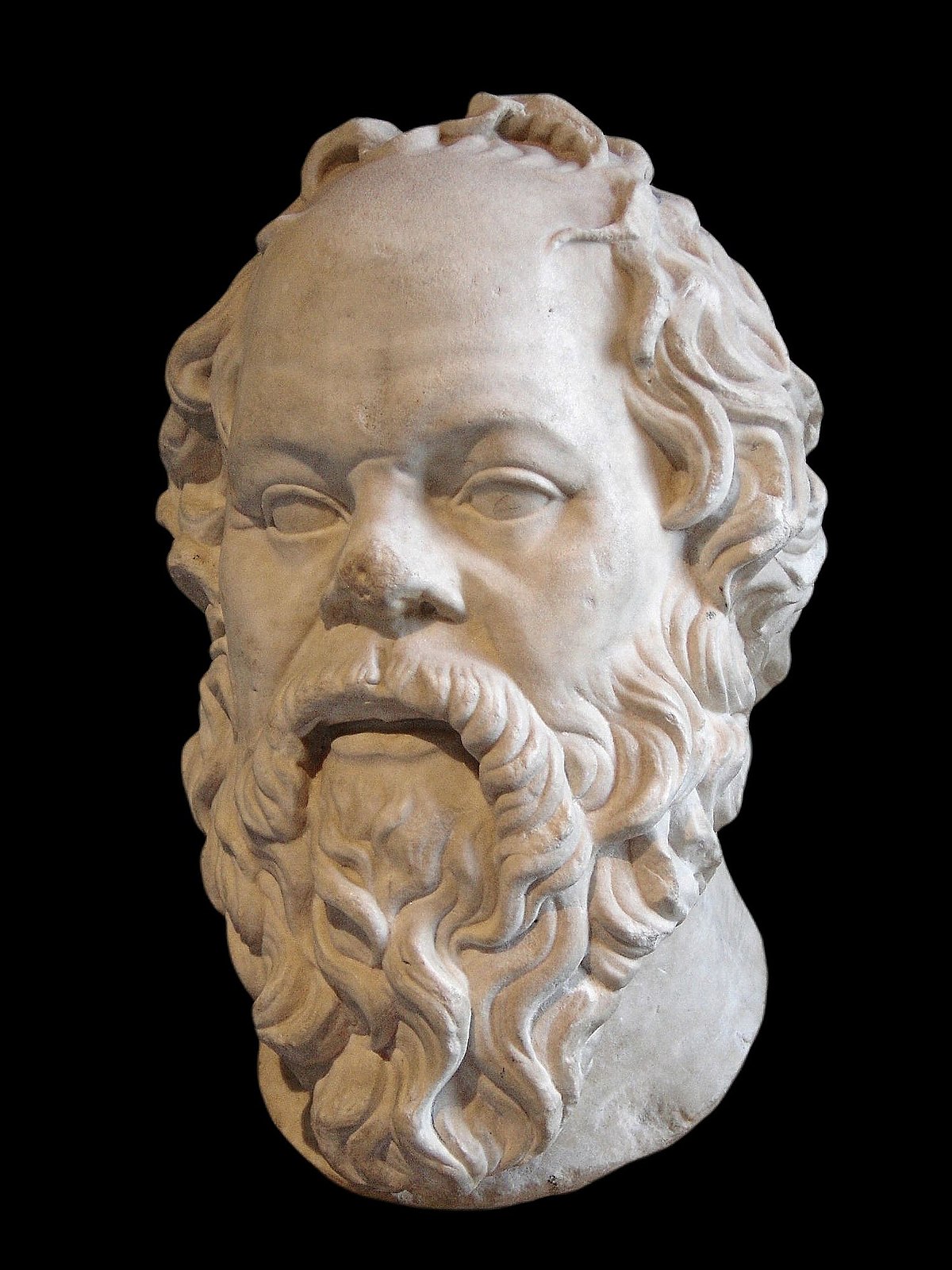
I recalled how, during my first few semesters there, I had been assigned Plato’s Apology in several different courses, absorbing perhaps in spite of myself Socrates’ insistence at his trial that the only wisdom he had ever claimed for himself was to know that he did not know.
I, of course, had only learned such lessons very imperfectly, given my limitations and given the historical context of my time on that campus. I had arrived there in the fall of 1964 – the fall of the Free Speech Movement in Berkeley – and I had graduated in the spring of 1968 – the spring of Martin Luther King Jr’s and Robert Kennedy’s assassinations and of student uprisings in Paris and Prague and yes, in Cambridge. Those four years had not been the best years “to talk and to listen with care and humility, to seek deeper understanding, and to meet one another with compassion.”
Yet when, a few years later, I found myself addressing a free speech issue on the floor of the Montana House of Representatives, it was to my education that I turned for inspiration, calling on what I had learned from John Locke and John Stuart Mill about how the only way we could ever be sure of anything was by allowing and even encouraging those who disagreed with what we thought we knew to do their level best to disprove it. And when, a few decades after that, I set out (in Citizens Uniting to Restore Our Democracy) to understand what was so wrong with the free speech doctrine of the Supreme Court’s Citizens United decision, I drew again on the same texts I had underlined so avidly as an undergraduate.
We have come again to a time of turmoil on our campuses, when many people on both the right and the left, certain of what they know, sometimes take to shouting down those they know to be wrong. In the last two years, for example, conservative speakers have been shouted down at Yale and Stanford law schools in demonstrations of incivility that strike me as the exact opposite of what the academy is all about.
I have no doubt that such intolerance provided part of the background for Congresswoman Elise Stefanik’s carefully designed ambush of Claudine Gay and the presidents of MIT and Penn at the December 5 House Education Committee hearing. As the Washington Post reported. Stefanik, herself a Harvard graduate, “accused Harvard … of making ‘disingenuous pleas for free speech when they themselves have sought to crush and silence opposing viewpoints for decades leading to this reckoning.’” When Penn’s president Liz Magill resigned amidst the uproar following the hearing, Stefanik tweeted, “One down. Two to go.”
In spite of this political pressure being compounded by bullying from wealthy donor alumni like Bill Ackman, Gay received the unanimous backing of the alumni association’s executive board and, crucially, of the governing Harvard Corporation. At that juncture, she and many of us who supported her might have recalled the line from the anthem Fair Harvard: “Calm rising through change and through storm.”
With such solid backing, Claudine Gay can now go on to help Harvard reclaim her vision of a university community determined “to talk and to listen with care and humility, to seek deeper understanding, and to meet one another with compassion.” The long-term cure for intolerance and incivility from either the left or the right is to double down on those core values of open inquiry and dialogue that have always epitomized the liberal arts university.
Daniel Kemmis is the author of Citizens Uniting to Restore Our Democracy


Leave A Comment