Faithful to its stated belief “that enlightened discussion of public policy is the cornerstone of our democracy,” the Burton K. Wheeler Center has invited Montanans to a conference in Bozeman this week, focusing on “Media and Democracy in an Era of Mistrust.” By cultivating and encouraging such conversations, university-affiliated platforms like the Wheeler Center or — here in Missoula, the Mansfield Center — serve as indispensable components of what might appropriately be termed the “civic infrastructure” of a sprawling state like Montana. Other mainstays of that infrastructure include the Montana Community Foundation, the Montana Nonprofit Association, Humanities Montana, and the League of Women Voters of Montana, to name only a few.
Active citizens across the country could readily identify equivalent institutions in their states — venues where serious, trans-partisan discussions of challenging public issues assist that state’s citizens and officeholders to discern pathways to wise public policy. It is this kind of deliberation, I firmly believe (and have argued in Citizens Uniting to Restore Our Democracy) that lies even closer to the heart of democracy than other key components like majority rule or equality. Without the ongoing cultivation of such problem-solving, opportunity-seizing dialogue, democracy simply cannot sustain itself.
Very much the same might be said of the topic to which the Wheeler Center has addressed its attention in this conference. In fact, “the media” are a considerably more visible, and no less crucial element of civic infrastructure than platforms for dialogue like the Wheeler and Mansfield centers. To put it simply, media are those channels through which a society communicates with itself. If we understand a democratic society to be one committed to communicating with itself in that particular way that will enable it to solve the biggest problems and realize the most promising opportunities presented to it, then its media are an absolutely foundational component of its democratic infrastructure.

What has become painfully apparent in our time is that far too often, our media are failing us on this score. This part of our civic infrastructure, in other words, is in serious disrepair. Is anything like a “bipartisan infrastructure bill” conceivable here? I take that to be the central question behind this conference in Bozeman. Acting “as a firmly nonpartisan, nonprofit public policy organization,” the Wheeler Center has invited a discussion that it hopes might prove “a significant early step toward addressing and healing the crippling mistrust we are enduring in today’s society.”
Without in any sense presuming to cover the waterfront, I would invite thoughts about three features of this failing infrastructure.
First is a market failure. The cascading elimination of daily newspapers across the country has been well documented and deeply lamented. That devastation has been the result, in no small part, of the steady expansion of social media, whose market-driven co-optation of people’s limited store of attention was the subject of the chilling Netflix documentary “The Social Dilemma.” The polarizing, tribalizing, and general dumbing-down resulting from this very successful business model has contributed hugely to the problems now besetting democracy.

With media markets failing democracy so extensively and consequentially, two possible responses come immediately to mind. One is the intervention of philanthropy. This is a natural place for philanthropy to concentrate significant resources, first because repairing democracy is such vital work in itself, and second because it is an indispensable way to hedge philanthropic bets in all kinds of substantive arenas (including the current philanthropic focus on equity). As the Mansfield Center’s Robert Saldin writes, “there will likely need to be a concerted effort to encourage philanthropists concerned about the health of our democracy to redirect their giving to support local media.”
I would put it even more emphatically. Given the deepening failure of the market to maintain this crucial feature of our democratic infrastructure, philanthropy is going to have to assume steadily more responsibility in this arena, and its involvement has to be strategic, sustained and substantial. It is past time for the field of philanthropy to recognize (and act as if it recognized) that a poorly informed or badly polarized body politic simply cannot accomplish any of the objectives to which philanthropy appropriately addresses itself.
Fortunately, this has begun to happen. As a quick glance at the American Journalism Project or the Institute for Nonprofit News will reveal, the last few years have brought a rising tide of philanthropic interest in this effort to heal a major wound in our body politic. As a result, the Knight Foundation reports, “The local sector of nonprofit news is growing rapidly, with an average of nearly one launch per month for each of the past three years.”
Beyond addressing the market failures that have so seriously corroded the media component of our democratic infrastructure, we need (as the Wheeler Center has suggested) to confront the deepening mistrust those failures have so seriously exacerbated. Two mustard-seed-sized ideas might provide a place to begin that conversation.
One arose this past summer during a workshop that my colleague Wendy Willis and I conducted under the auspices of the National Coalition for Dialogue and Deliberation. When we asked how the considerable democratic skills that have been developed and nurtured in this field of deliberation could be put more intentionally to the service of healing democracy, we heard a flood of suggestions about using media much more effectively to highlight the problem-solving power of genuine deliberation. Whether “deliberative reality TV” or a “deliberative hotline” have a future remains to be seen, but we intend to keep pursuing these and other ideas for innovative uses of media in democratic renewal.

Finally, as I acknowledged in the preface to Citizens Uniting to Restore Our Democracy, most people of my age can hope to contribute only very marginally to the emergence of new forms of media through which a democratic society might better solve its problems and realize its opportunities. But as younger, more agile generations take on that work, the question of what gets communicated might benefit from our being more intentional about bringing embedded wisdom to bear on those problems and opportunities.
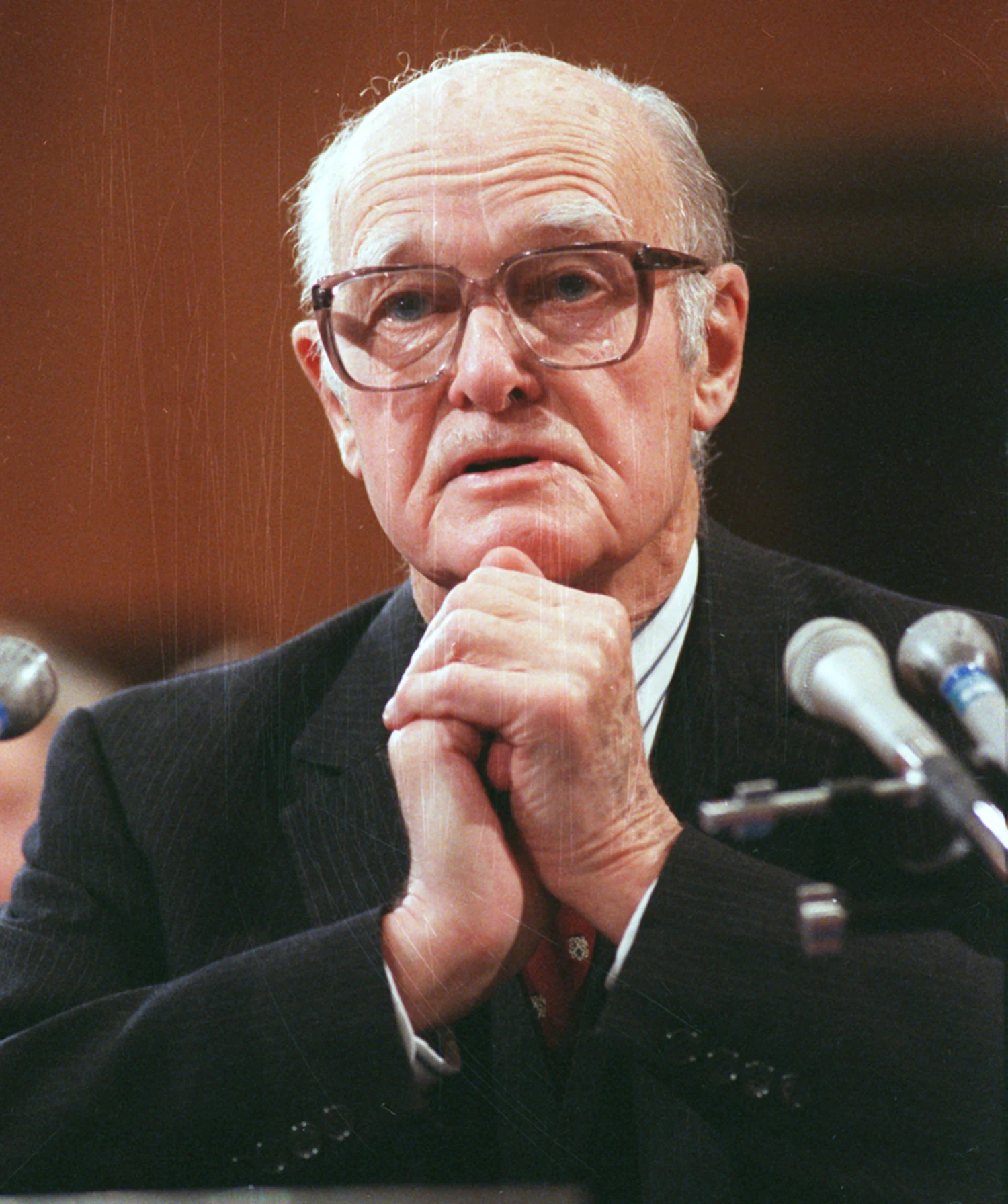
George F. Kennan
In Around the Cragged Hill, George F. Kennan opined that “there could be no country that makes less use of the accumulated experience of those who have served it – none that is more frivolously neglectful and improvident of these assets – than the United States of America.” Alongside the resources of philanthropy, then, and alongside the considerable democratic promise of honest deliberation, the media through which a democratic society communicates with itself might dedicate a channel or two to the counsel of its elders.
Daniel Kemmis is the author of Citizens Uniting to Restore Our Democracy


Leave A Comment