
Seeking to “increase the chances of issue and solution-oriented candidates to move on from the primary to the general election,” two lifelong Montana Republicans have endorsed an open primary system in our state that would “allow every voter to vote for any candidate in any party in the primary election.” Former state senate president and Secretary of State Bob Brown and former Governor Marc Racicot argue that under such a reform, “candidates narrowly focusing on ultra partisan true believers would likely be dislodged from the position of dominance they enjoy with closed primary elections.”

Marc Racicot Bob Brown
As I’ve told these two old friends from across the partisan aisle, I’m less thoroughly sold on their preferred reform than on another that they acknowledge could be an adjunct to the open primary: namely, ranked choice voting. Honest disagreements among reasonable people are grist for the mill of any working democracy, and they will be frequent and healthy as we move forward with the challenging work of healing our body politic. In this case, what we want to keep in mind is that the main objective of any of these election reforms is to slow (and eventually to reverse) the ever-worsening polarization of our political culture, which all too often replaces problem-solving deliberation.
Few politically savvy Americans would have expected to find Alaska at the forefront of efforts to salvage our elections from the disabling polarization now besetting them. But that is actually the biggest news from Alaska’s August 16 special congressional election – bigger even than the fact that Alaskans elected their first Native American to Congress. Democrat Mary Peltola’s victory over Republicans Sarah Palin and Nick Begich would not have been possible had Alaska not, in 2020 joined the slowly growing number of local and state jurisdictions in adopting ranked choice voting (RCV).
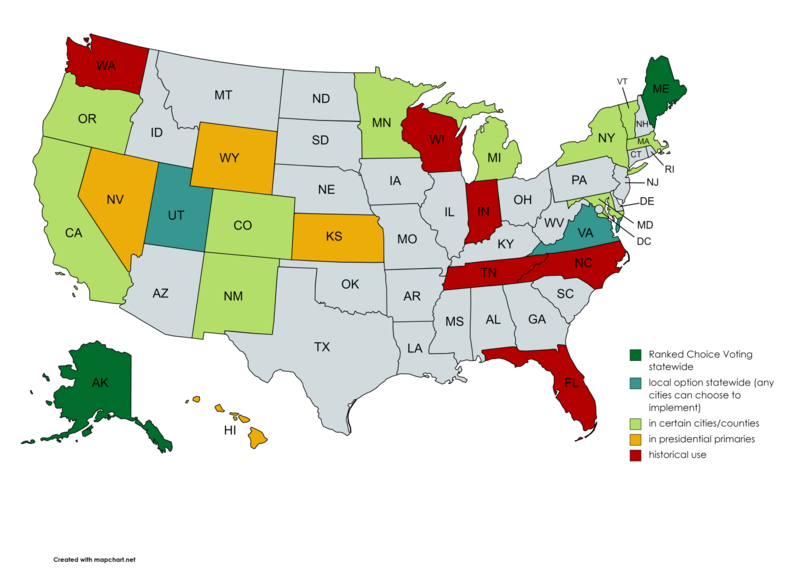
This doesn’t mean that RCV automatically or even usually favors Democrats. In fact, Alaska’s new system may well be instrumental in keeping Republican Lisa Murkowski in the U.S. Senate. Murkowski stands as an example of the kind of result that supporters of RCV seek, namely the election of people more focused on solving problems than on scoring debating points or implementing ideologies. By contrast, our prevailing mechanisms for electing representatives privileges the selection of ideologues over problem-solvers.
Bipolarity is deeply systemic in our politics. This is evident from the fact that the two major parties, unable to agree on almost anything else or to work toward any other common objectives, work hand in glove to maintain the dominance of the two-party system. They don’t have to think about it or consult, let alone conspire about it. It happens automatically – systemically.
There is therefore no point in blaming anyone for it. It just is. And it will continue, not only to exist, but to dominate our politics until and unless a conscious, sustained effort is made to transform it into something else. (Even then, it is absolutely certain that every conceivable effort will be made to game the system. That, too, is built into the very fact of its being a system. But effective hedges against gaming can be built into most systems.)
Why should we bother to undertake this very difficult task? There are currently two major threats to the continued viability of democratic self-government. One is the essentially unconstrained influence of money in our electoral system. The other is the unconstrained dominance of bipolar politics.
Money has always played a significant role in politics, and some form of two-party system has pretty much always characterized American politics. But we have now seen both of these factors assume commanding and dangerous proportions. It seems that when either money or bipolarity reaches a certain level of dominance, it saturates (or metastasizes into) everything it touches. We see this now in the deepening polarization, not just between elected officials, but among the electorate itself.
All the more reason, then, to get to work on countermeasures before it gets any worse. It’s already to the point where very few partisans can even conceive of voting for someone from the other party – except as part of a cynical maneuver, like the one Democrats have been deploying to help extreme MAGA Republicans defeat more moderate (and more electable) Republicans in primary elections. One of the reasons that I have been hesitant about supporting an open or blanket primary here in Montana is that it seems to me to be especially susceptible to this kind of cynical maneuver.
Ranked choice voting will invite its own kinds of cynical maneuvers, of course, but part of its appeal lies in the fact that, by its very structure, it responds to and nurtures the non-polar dimensions of our human being. To put it bluntly, pervasive bipolarity is not good for us as people. We diminish ourselves when we reduce so much of the world to simple, either-or dichotomies. A truly humane politics would be one that engages us in shaping or creating our world. That requires our dealing with the actual complexity (as opposed to the longed-for simplicity) of the world.
Ranked choice voting takes a big step in this direction by inviting voters to move beyond simplistic dualism, to embrace and wrestle with at least a little of the actual complexity of things. At a minimum, it does that by giving every voter an opportunity to think beyond choosing the lesser of two evils, to think, “Now if I can’t get this candidate, who would be the next best choice?”
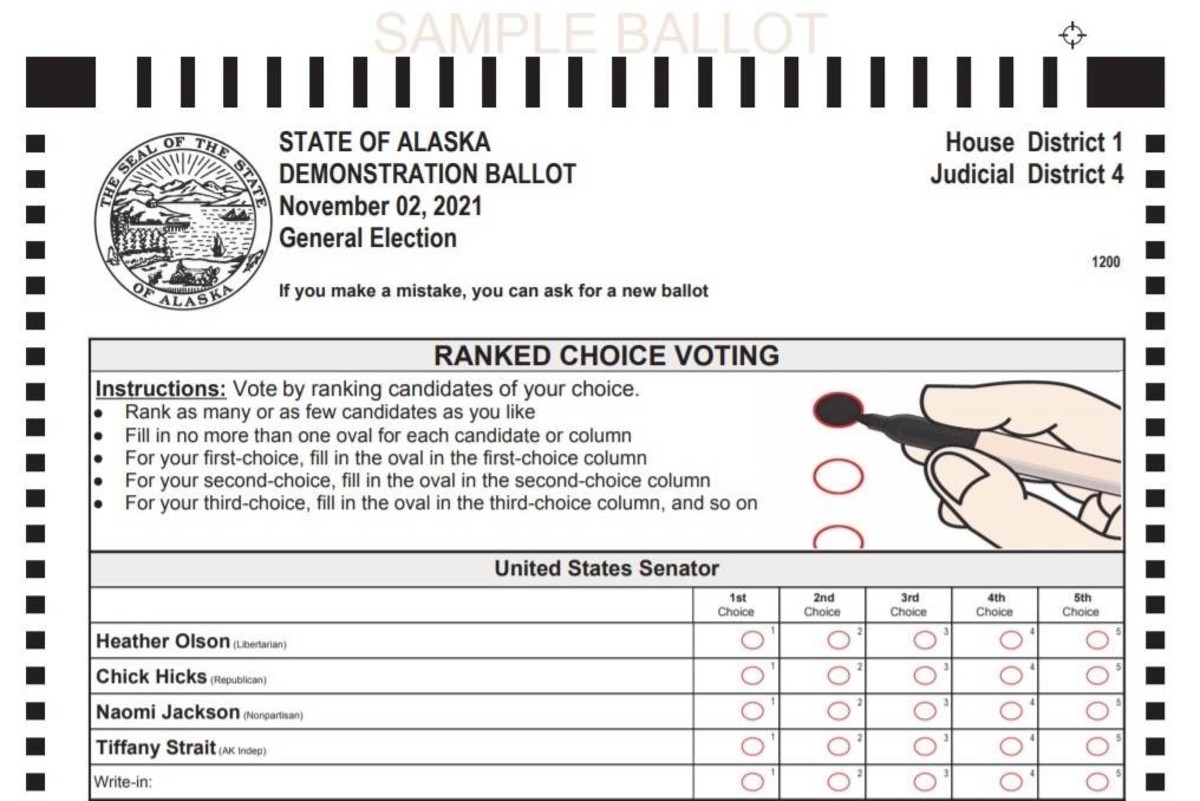
Ranked choice voting also has the advantage of being available on all levels – local, state — even national, if it became normalized in presidential primaries. I have been engaged, for example, in a number of conversations recently with people thinking of making RCV a feature of Missoula elections. If Marc Racicot and Bob Brown succeed in encouraging Montanans to adopt an open primary system, ranked choice voting in Montana’s general elections would be a natural adjunct to those primary elections.
As I argued in Citizens Uniting to Restore Our Democracy, the more often citizens exercise our democratic muscles in concerted efforts to bring money and partisanship back within reasonable bounds, the better prepared we will be for the next round in that struggle. One side-benefit of the steadily growing interest in election reform, for example, is that it could begin to spill over into Electoral College reform. The only reason we continue to disenfranchise so many millions of voters in presidential elections by using winner-take-all rules is because neither party will countenance a departure from that system. Constraining bipolarity through reforms like RCV or open primaries would be a step toward doing the same with the Electoral College.
Daniel Kemmis, a former Speaker of the Montana House of Representatives, is the author of Citizens Uniting to Restore our Democracy


Leave A Comment