A decade ago, when the very idea of Donald Trump becoming president would have been greeted by most of us as some kind of joke, I found myself chairing the public policy committee of a regional philanthropic service organization called Philanthropy Northwest. [PNW] As PNW sought ways to assist its member foundations to be more effective in pursuing their various missions in the public realm, the committee began to ask whether that public arena hadn’t itself slipped so deeply into dysfunction that philanthropists might need to devote some of their attention and resources to the repair of public institutions and practices.
Partnering with the Kettering Foundation, PNW in 2014 produced a brief monograph entitled Philanthropy and the Renewal of Democracy: Is it Time to Step up Our Game? As we pointed out in that pamphlet, the Hewlett Foundation had begun to ask similar questions, resulting in the establishment of its Madison Initiative under the leadership of an Oxford- and Harvard-trained political theorist named Daniel Stid.
None of us, in 2014, could foresee that the multiple dysfunctions into which our political culture had already descended would lead to the election of the most unpresidential president in American history, or to the January 6 riot aimed at keeping this monomaniac in office, and we could certainly not have foreseen the very real possibility that a year from now, his transition team might well be drawing up the roster for a second Trump administration.
For most of my readers, as for me, that possibility is so nearly unthinkable that our natural instinct is to pour all of our attention, energy, and available resources into preventing that outcome. That is an utterly understandable response. But it takes no account of the fact that Trumpism arose from an already profoundly dysfunctional political culture, the deep roots of which must be addressed if we are to have any chance of restoring the body politic to a condition of sustainable health. Which brings me back to Daniel Stid.
After leading the Madison Initiative (now the U.S.Democracy Program) for his agreed term of eight years, Stid has moved on to serve as the Executive Director of Lyceum Labs, “dedicated to improving the quality of political leadership and party politics in the United States.” Against his background of philanthropic work for the cause of democracy, Stid notes in a recent blog post that “many democracy grant makers and grant seekers alike are heading into 2024 driven by the same urgent question they first asked themselves in 2016 and then again in 2020. How can we keep Donald Trump away from the levers of power so he does not debase our democracy?”
Subject to “no illusions that a second Trump presidency would be anything other than bad for democracy,” and recognizing that the question of how to stop Trump is a necessary focus for the ”political parties, candidates, factions, operatives, donors, activists, and voters who oppose Donald Trump,” Stid nevertheless insists that it is “the wrong question for charitable funders and the nonprofits they support to be asking themselves.”
Instead, Stid suggests three other foci for philanthropists and those they support:
- Start seeing “them” as our fellow citizens;
- Recognize – and rein in – the shadow parties;
- Focus on 2044, not 2024
While all three of Stid’s prescriptions are worthy of close attention, it’s this last recommendation that I most want to examine, in part because it is the one that runs most strongly against my (and I’ll bet your) gut political instincts. As Stid puts it, “For many readers, this will be the hardest of the red pills I am suggesting we all need to swallow. They see Donald Trump as nothing less than an existential threat to U.S. democracy. In their view, if Trump is elected again, we will lose the republic. Therefore, we must put prudence and concern with subsequent elections and civic health to one side. Our political life is no longer a recurring contest; it is now an apocalyptic showdown from which we cannot shrink.”
With so much at stake, it is natural for all of us – not only the philanthropists and grantees that Stid is addressing, but all serious citizens – to focus everything we’ve got on the one objective of keeping Donald Trump from returning to the Oval Office. Under those circumstances, Stid’s injunction to “focus on 2044, not 2024” sounds civically suicidal.
But of course this is not (and Stid doesn’t claim that it is) a strictly either/or choice. It is possible for philanthropists or any of us to divide our attention and our resources between short- and longer-term objectives, projects and activities. Possible, but not easy, especially when the stakes are as high as they seem in 2024. But it is exactly because so much is at stake that we cannot afford not to divide our attention and resources between next year and the next several decades.
In Citizens Uniting to Restore Our Democracy I outlined one mechanism that might assist us in the difficult task of attending simultaneously to urgent short-term and crucial long-term goods. The idea is that of a “democracy tithe” – the intentional setting aside of some portion of our civic resources, not for next year’s campaigns or for our favorite social or environmental organizations or projects, but to keep democracy itself on an even keel.
This is a good time of year to be thinking about a democracy tithe. Those who are rounding out their charitable giving for the calendar year might search for a 501(C)(3) that is dedicated to the long-term strengthening of democracy. I’ll make a contribution to FairVote, which continues to advance the cause of ranked choice voting and other election reforms – but you may have one or two of your own reform organizations in mind. (If not, drop me a note in the comment section and I’ll offer some suggestions.)
If the holidays have you tapped out, think about a New Year’s resolution to dedicate some steady percentage of your civic giving to democracy’s long game. The best time to plant a tree, Daniel Stid reminds us, “was twenty years ago. The next best time is this morning. So let’s get started!”
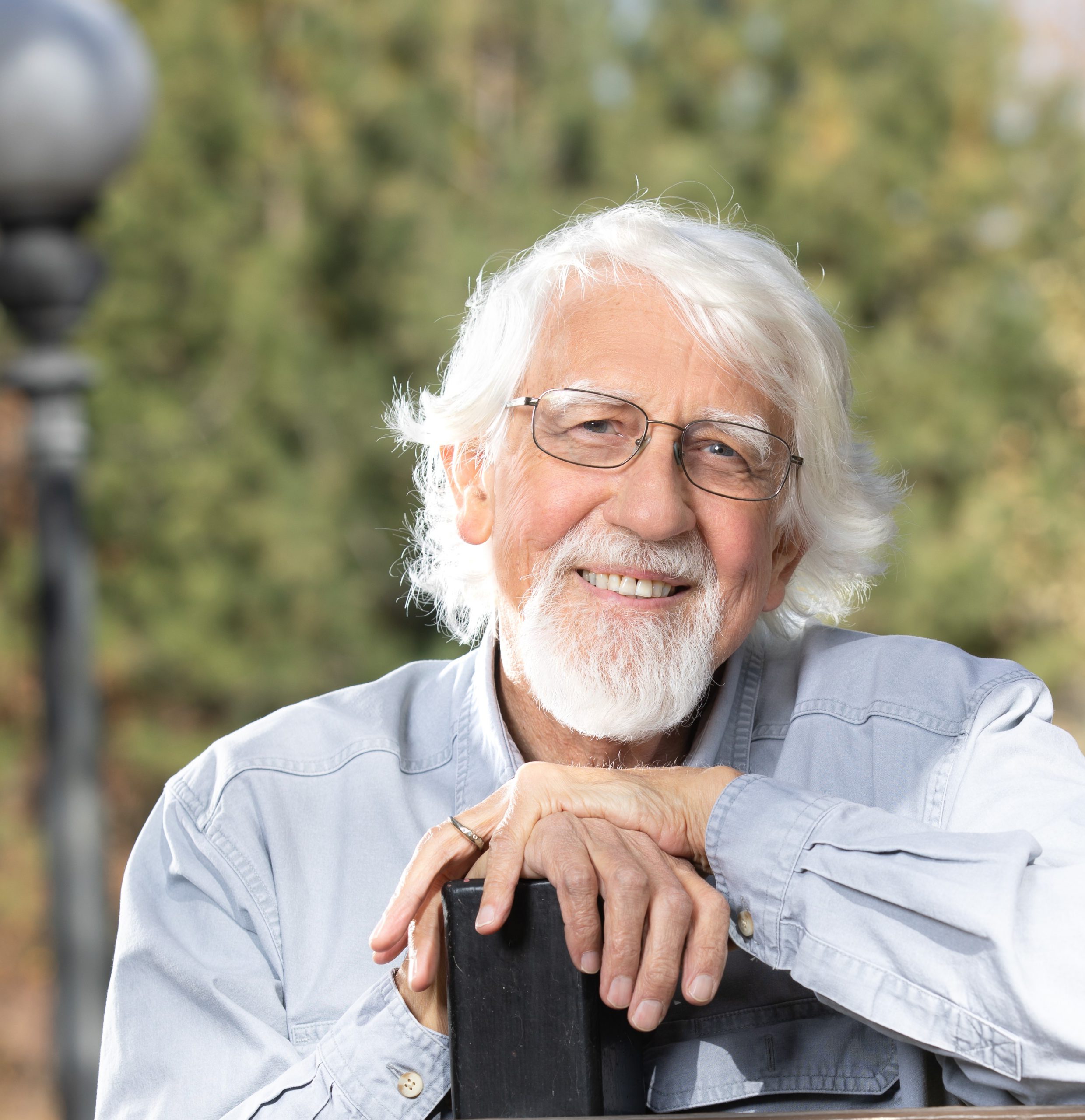
Daniel Kemmis is the author of Citizens Uniting to Restore Our Democracy.


Leave A Comment