
Most of us would probably agree that democracy has something to do with self-determination, although few of us might be able to say exactly how the two concepts are related. It’s far from clear to me, even though I often use phrases like “democratic self-determination.” So I’d like to see if I can find any greater clarity about this relationship, and I invite you to join me in the search, bringing your own experience to bear on the inquiry, and then, perhaps, your own reflections.
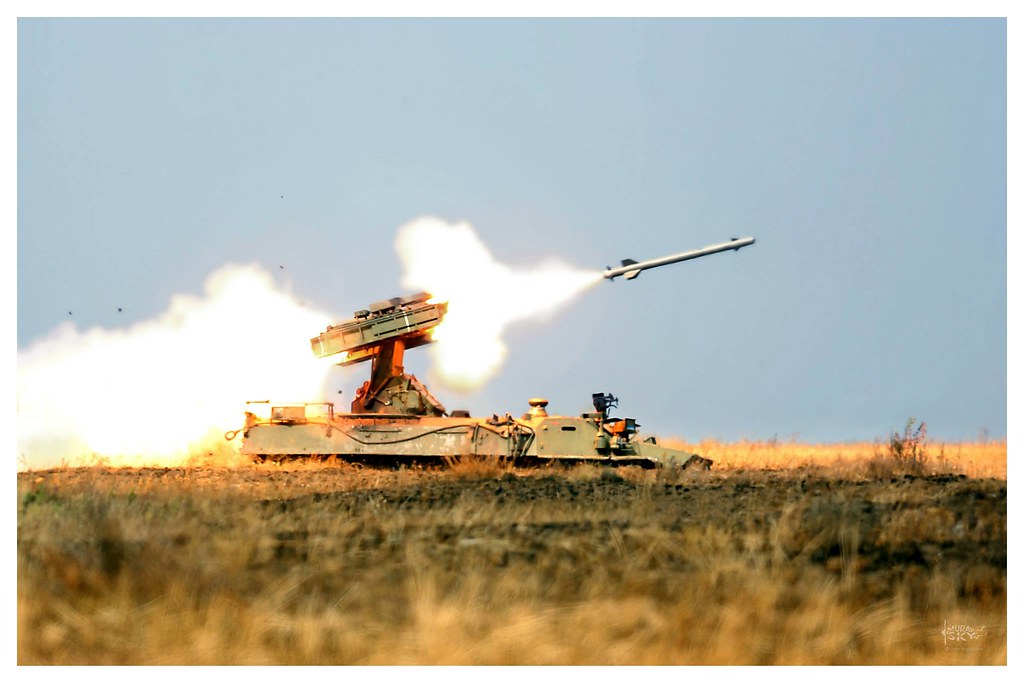
Let’s start with the war in Ukraine. The Ukrainian people can surely be said to be in a struggle for self-determination. They want Ukrainians, not Russians to determine what happens within the boundaries of Ukraine. If they were to lose that struggle, most of us would consider it a serious blow to democracy, because Ukrainians would no longer be a self-determining people.
Let’s keep that tableau in the background while turning to what I find an intriguing juxtaposition of self-determination claims here in America. Both pro-choice and anti-vaccine activists can be seen carrying signs that would seem to an interplanetary traveler to be interchangeable with each other. “Keep your laws off my body,” one says, while the other proclaims, “My body: my choice – Let me call my own shots.” Without pushing the parallelism to the point of losing one or another set of readers altogether, I invite us at least to consider for a minute what these slogans might be telling us about democracy.

As I write this, still inviting readers to bring their own experiences to bear on these musings, I recognize how much I personally treasure the freedom to write whatever I think is true and perhaps useful. In my own case, the desire to contribute some modicum to the common good is a fairly central motivation. If I were somehow prevented from doing this, my sense of self-determination would be diminished. But I don’t expect (nor do I think it reasonable to expect) most people to have the common good so near the top of their wish lists.
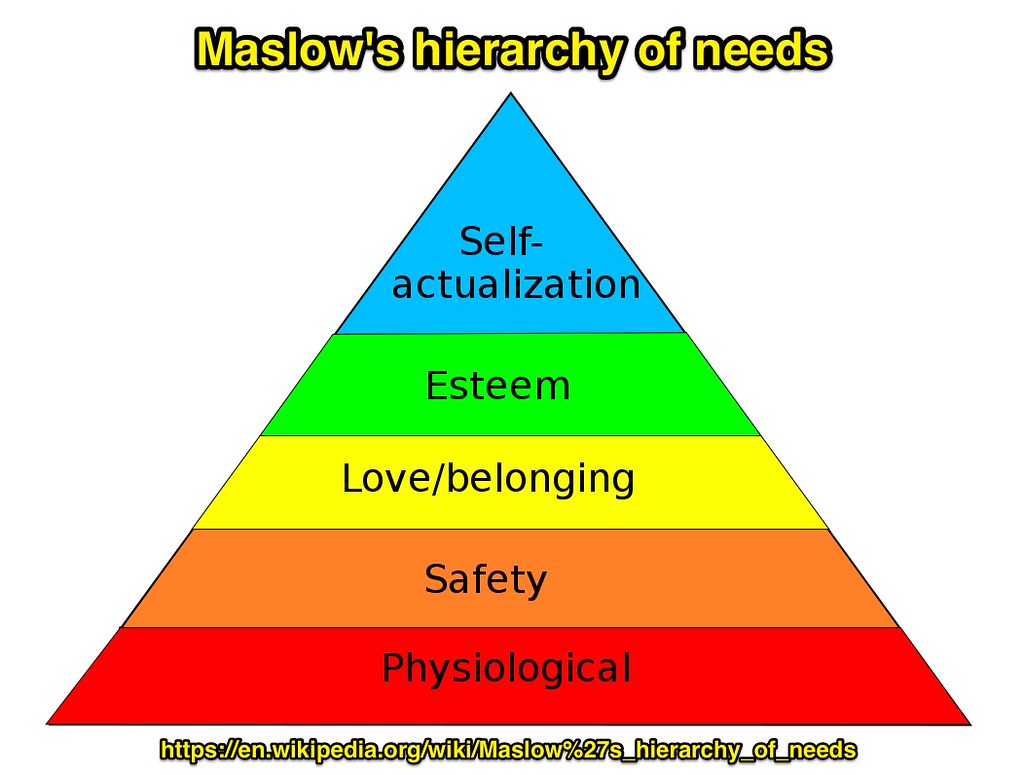
It’s all too painfully obvious that something like Abraham Maslow’s hierarchy of needs continues to determine where most of the world’s people must focus their attention at any given time. For them, securing food, clothing and shelter for themselves and their families is more than enough of a challenge. And even among those privileged enough to operate at the very top of the pyramid, “self-actualization” is going to take an infinite variety of forms, only a few of which involve seeking the common good.
Still, the question of how the common good comes into the picture is going to be crucial to reaching any clarity about the relationship of self-determination to democracy. In the case of Ukraine’s struggle, the common good plays the central role, while with most abortion seekers or vaccine resisters it is secondary to personal considerations. The Second Amendment had put the common good front and center until Justice Scalia in his Heller opinion essentially erased those opening clauses about “the security of a free state” and “a well-ordered militia” in order to turn arms bearing into an individual right.

But even here, self-determination doesn’t disappear from view; quite the opposite. An assault rifle may honestly be seen by its owner as key to his ability to maintain self-determination, especially within the “castle” of his home. For many, this right is so central to their sense of autonomy that they will, in the polling booth, subordinate other vital elements of self-interest to this single-issue electoral concern.
The references here to legislatures and courts brings into focus a dimension of self-determination that I haven’t even mentioned yet, namely the entire structure of government by which a self-determining people attempts to deal with the constant stream of challenges it faces. While all of us seek (and sometimes find) a sense of self-determination over certain life circumstances by means of individual action, we know that there are many other circumstances that can only be shaped by acting in conjunction with others.

More often than not, that requires making behavior-constraining rules by which we all agree to be bound. Traffic regulations are a classic example. “Man is born free, but everywhere he is in chains,” Rousseau wrote, meaning that self-determination very often means precisely subjecting ourselves to group limits on individual freedom.
This inescapable fact shifts the focus from purely individual self-determination to a whole range of questions about how a self-determining people can go about making the rules that necessarily constrain individual action. Sometimes we do that by voting on proposed rules directly, as with citizen initiatives about guns or abortion rights. More often, though, we choose a few of our neighbors to make the rules on our behalf.
When those designated rule-makers impose constraints on my personal self-determination that I would not have chosen if I had been in their place, Rousseau’s chains may begin to chafe. I will then only continue to feel self-determining if certain conditions prevail. An important one is that the rule-makers have to have acted — and to have been chosen — according to procedures that I consider fair.
It is at this point that we now find ourselves encountering the multiple crises of legitimacy that are producing such a steady stream of proclamations about an endangered democracy. With one very large segment of the citizenry questioning the integrity of elections and another large segment questioning the fundamental fairness of mechanisms like the Electoral College and gerrymandering that persistently empower minorities, the always delicate fabric of democratic legitimacy has worn dangerously thin.
As I suggested at the outset, I invite you to join me in examining our own roles in this drama. We might begin by recalling those features of our personal lives where we take satisfaction (even pride) in our own self-determining behavior. Keep that foundational sense of self-determination in mind as you think of joint action – with neighbors, within a voluntary association, or in local government – where that sense of self-determination manifested itself in an equally satisfying but perhaps more subtle, and certainly more shared way. The real challenge is to bring those self-determining, democratic competencies to bear on the crucial work of mending our larger civic fabric.
I welcome your thoughts on that question. I’ve written about it in Citizens Uniting to Restore Our Democracy, and I’ll write more in a later blog if you’ll share your own thoughts by posting a comment on what I’ve written here.
Daniel Kemmis is the author of Citizens Uniting to Restore Our Democracy


This comment is from Sister Marie Corr: Dear Daniel, I have spent significant time pondering the relationship between the common good and democracy and self-determination. Thanks for the invitation to a deeper probing of my life. I chose a lifestyle to “live simply so others can simply live”. That has become my self determining choice and primary value in life. Living in community with others committed to the same personal choice has made this way more sustainable. I believe our lived democracy has become so entangled in Capitalism that we are out of balance in living for the common good. So, like you who has modeled well for me, living for the common good is basic to healthy Democracy.
Blessings, Marie
Thank you so much, Marie, for sending this comment. I have come to the conclusion that the challenge I posed to my readers in this blog post often stimulated thought, but very few people have taken it to the point of writing down their thoughts and submitting them. I choose to think that that’s because this takes people to unfamiliar territory — not necessarily unwelcome territory, but unknown. I think most people are already pretty sure that they know what democracy means to them — familiar ground like voting rights or gerrymandering — but they’re not accustomed to thinking of it in such personal and everyday terms as I invited. Bless you for taking up the challenge. And your invocation of your intentional community is something I would not have thought of, but it fits so well with the thrust of my argument. I’m now going to have to think at least as hard as you did about how this all fits together. dk
Linda Gillison sent this: I have been thinking a lot about your recent blog on the complexities of “self-determination.”. This morning I received the attached from Portside, and it reflected rather nicely–and far more eloquently than I could (that’s Zizek!)–what I’ve been thinking about Ukraine lately:
Ukraine’s Tale of Two Colonizations
https://portside.org/2022-09-12/ukraines-tale-two-colonizations
I keep thinking also in that connection about Chris Hedges ‘s assertion that, “If the truth is the first casualty when war breaks out, ambiguity is surely the second.”
Linda
Thanks, Linda. The Portside article does indeed flesh out what I meant in pointing to the Ukrainian resistance as a classic case of self-determination. In fact, Zizek uses that term. I agree that the no-holds-barred pursuit of neoliberal free-market ideology which the West has embraced so thoroughly would not give most ordinary Ukrainians any real access to self-determination. On the contrary, that single-minded commitment to unfettered free-marketism has to be identified as a major culprit behind the resort to narrow-minded, generally xenophobic nationalism in Poland and Hungary — and it has contributed mightily to Brexit and to Trumpism. dk